5 min read
How to Start a Vending Machine Business Without a Vending Machine
How to start a vending machine business on a small budget, using a fridge or cabinet you already have, with a real cold brew stand as an example.
Most guides on how to start a vending machine business begin with buying a vending machine. That's also the most expensive part. Shopify's guide puts a new standard snack or drink machine at $3,000 and up, and total startup costs for a single new machine at $5,000 to $10,000.
There's a cheaper way to test the business: start with a fridge or cabinet you already have, add a payment-controlled lock, and let customers pay with their phones. Here's how it works, with a real cold brew stand as an example.
What does it cost to start a vending machine business?
It depends on the equipment you choose. Using Shopify's figures for traditional machines:
| Equipment | Typical cost | Good for |
|---|---|---|
| New snack or drink machine | $3,000+ | High-traffic public spots |
| Used snack or drink machine | $500 to $3,000 | Lower budgets, with more maintenance risk |
| Smart vending machine or cooler | $8,000 to $15,000+ | Large selections, managed placements |
| Fridge or cabinet with a payment lock | The cabinet plus a $99 Thingio kit | Low initial investment, custom or unique enclosures |
On top of equipment, plan for initial inventory, and any local permits. Shopify estimates commissions at 5% to 25% of gross sales.
Step 1: Pick a product people want right now
Vending works best for things people want immediately and don't want to go out for: cold drinks, coffee, snacks, or a local product they can't get elsewhere. The narrower your audience, the easier it is to pick a product that sells.
Products with a story often sell well in small placements, such as a local roaster's cold brew, honey from a nearby farm, or baked goods.
Step 2: Find a location
Your location matters more than your equipment. Look for places where the same people come back every day and a coffee shop or convenience store isn't right next door:
- Offices and coworking spaces
- Gyms and studios
- Apartment and condo lobbies
- Makerspaces, workshops, and labs
- Farms and roadside stands
Talk to the property manager or owner directly. Agree up front on who supplies power, how often you'll restock, and whether they get a share of sales.
Step 3: Choose your equipment
If you're testing a new product or location, start with the least expensive setup that still keeps your inventory secure. A beverage fridge or a locking display cabinet shows off the product, and a payment-controlled lock makes sure it only opens after someone pays.
Once a location proves itself, you can add capacity or move to larger equipment.
Step 4: Accept digital payments
Fewer people carry cash, and coin mechanisms are one more thing to break and empty. With Thingio, customers scan a QR code, pay with Apple Pay or a card, and the cabinet unlocks automatically. Sales go straight to your account, and you never have to collect cash.
Step 5: Stock, restock, and track sales
Restocking is the ongoing work in any vending business. Track what sells and when, so you can bring the right amount each trip and drop slow sellers. Thingio's dashboard shows live inventory and sales for each cabinet, so you know when a restock is due before you drive out.
Case study: a self-serve cold brew stand at mHUB
mHUB, a coworking space in Chicago, wanted cold brew on hand for its members without staffing a counter.
They used a small beverage refrigerator stocked with 12 oz cans of Metric's (a local Chicago coffee roaster) classic cold brew, with a small "Scan to purchase" sign and QR code on top. The Thingio kit controls access to the refrigerator. A member scans the code, pays on their phone, and the door unlocks so they can grab the cold brew.
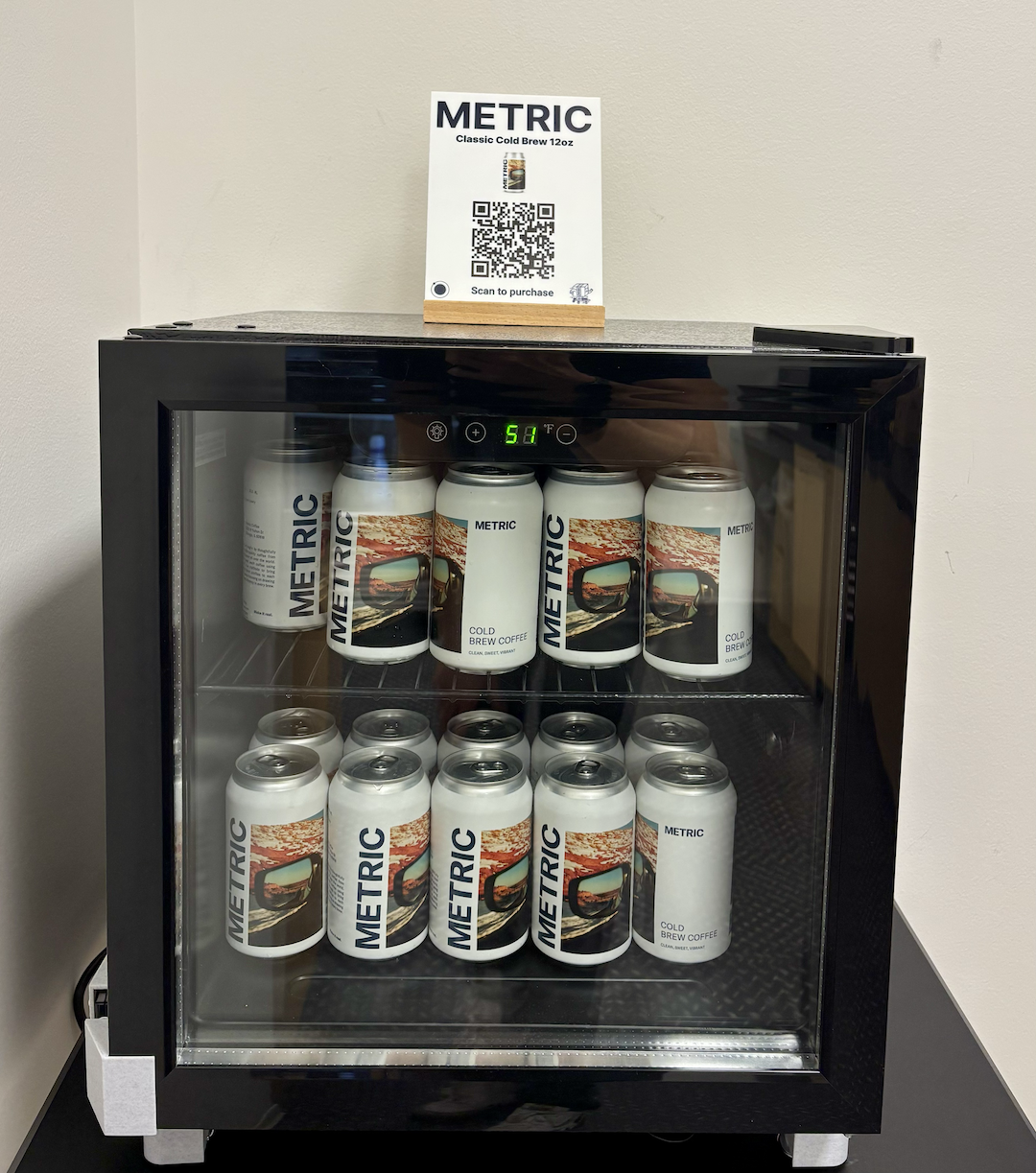
What makes this setup work:
- No vending machine. An ordinary refrigerator holds the product and shows it off.
- No staff. Nobody has to take payments or watch the stand.
- No cash. Every sale is a digital payment, so there's no coin box to empty and people don't need to have Venmo or Cash App installed.
- A captive audience. The same members come in every day, and the coffee is right where they work.
It's the same idea as a vending machine business, scaled down to one fridge in one good location with minimal up front investment.
Is a vending machine business profitable?
It can be, but profit comes down to a few numbers you can estimate before you start:
- Margin per item: your price minus what the product costs you.
- Daily sales: how many items the location actually moves.
- Costs: payment processing fees, any location commission, and the time and fuel to restock.
A low-cost setup makes an easy path to revenue at a real location without investing thousands into a machine.
Frequently asked questions
Can I start a vending business with no money?
Not quite, but you can start with very little. If you already own a refrigerator or cabinet, your main costs are the payment enabled lock and your first round of inventory.
Can I run a vending business part-time?
Yes. Many operators start with one or two locations and restock on a set schedule. Digital payments and remote inventory tracking cut down on site visits.
What sells best in vending?
Drinks and snacks are the classics, but small placements do well with something specific to the location, like local coffee at an office or honey from a local farmer.
Start with one location
The fastest way to learn the vending business is to run one location well. Pick a product, find a spot with steady traffic, and start with equipment you already have.
Thingio's Starter Kit turns a fridge or cabinet into a self-serve stand that only unlocks after payment. Get in touch and tell us what you want to sell.