3 min read
How to Start a Self-Serve Farm Stand
A practical guide to setting up an unstaffed farm stand, from choosing products and pricing to taking payments and preventing theft.
A self-serve farm stand lets you sell eggs, honey, produce, or baked goods without anyone standing behind a table. Customers stop by, pick what they want, pay, and go. Done well, it turns a driveway or roadside spot into a sales channel that works while you're busy doing everything else.
Here's how to set one up.
What do you need to start a self-serve stand?
At minimum:
- A structure. A table with a roof, a converted shed, or a lockable cabinet or cooler. Weatherproofing matters more than looks.
- A way to take payment. Cash box, payment app QR code, or a payment-controlled lock.
- Clear signs. One you can read from the road, plus prices and payment instructions at the stand.
- Products that hold up unattended. More on that next.
Before you build anything, check your local zoning rules and your state's cottage food laws. Requirements for roadside sales, signage, and items like eggs or baked goods vary by location.
What sells best at an unattended stand?
The best self-serve products are shelf-stable or easy to keep cool, simple to price, and grab-and-go:
- Honey and maple syrup
- Eggs, in a cooler or refrigerated cabinet
- Seasonal produce like sweet corn, tomatoes, and berries
- Firewood and kindling
- Cut flowers
- Jams, baked goods, and other cottage foods (where allowed)
High-value items like honey are worth extra protection, since they're the most tempting to walk off with.
How should you price items?
Keep it simple. Round prices and clear per-item or per-bundle pricing reduce confusion and math mistakes. If you only take cash, whole-dollar prices are almost required, because nobody leaves change in a cash box.
With digital payments you can price however you like, since customers aren't hunting for exact change.
How should customers pay?
This is the biggest decision you'll make. There are four common options:
| Option | Upfront cost | Pros | Cons |
|---|---|---|---|
| Honor box (cash) | Low | Simple, no fees | Easy to steal from, requires cash, needs regular emptying |
| Payment app QR sign (Venmo, Cash App) | Free | No hardware | Customers type the amount, payments are hard to verify, and not everyone uses payment apps like Venmo or Cash App installed |
| Payment-controlled lock (like Thingio) | Low | Product stays locked until payment succeeds, exact prices, sales tracking. Supports every type of credit card | Needs power and WiFi |
| Commercial vending machine | Thousands of dollars | Fully automated | Expensive, fixed product sizes |
Many customers no longer carry cash, so a cash-only stand leaves sales on the table. A payment app sign fixes that, but you're still trusting that every customer actually sends the money.
How do you prevent theft at a farm stand?
Most customers are honest, but news reports of cash box break-ins and fake payment-app "payments" show it only takes a few people to make a stand unprofitable.
Common ways to reduce losses:
- Bolt down and empty cash boxes often so there's never much to take.
- Add a visible camera. It deters casual theft and helps if something does happen.
- Count your inventory against what you collected to see where you stand.
- Lock the product, not just the money. A cabinet that only unlocks after a successful payment removes the honor system for your most valuable items.
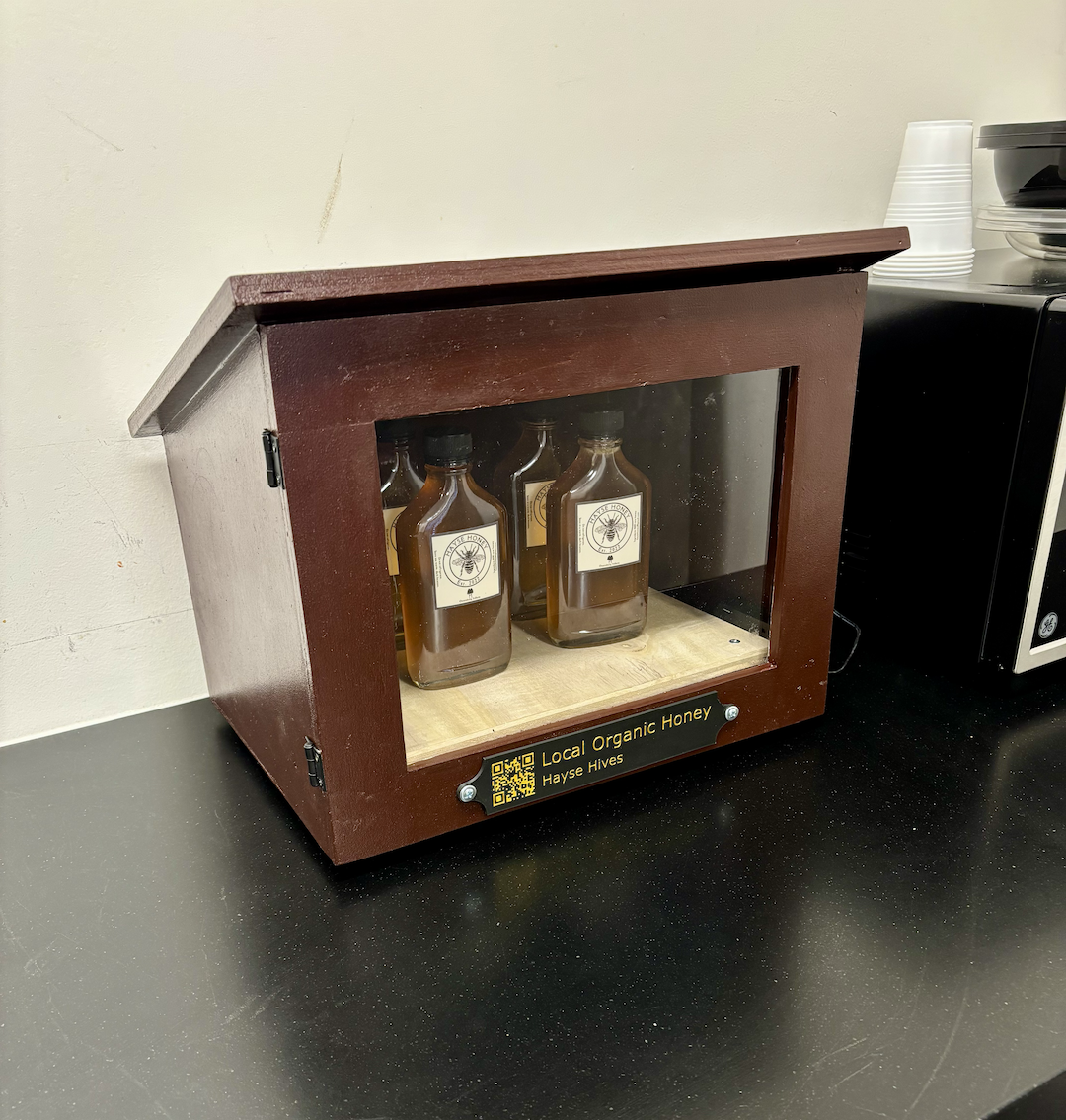
That last option is what Hayse Hives did with their self-serve honey cabinet. Customers scan a QR code, pay with Apple Pay or a card, and the cabinet unlocks. No one needs to be on site.
Can you start with what you already have?
Yes. You don't need a custom-built stand to get started. An existing cabinet, display case, or refrigerator works fine for most products. Start small, see what sells, and expand from there.
Thingio's Starter Kit adds a payment-controlled lock to the cabinet you already own and connects it to a dashboard where you can track sales and inventory. If you're not sure it fits your setup, get in touch and tell us what you're selling.